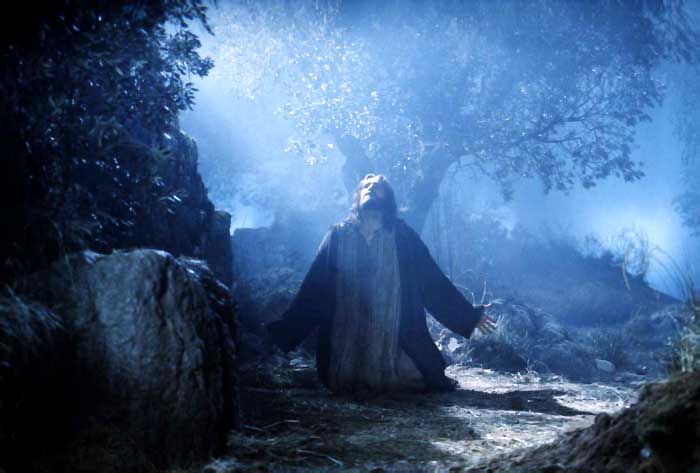
Alleluia! Christus resurrexit!

O Love, O Charity beyond all telling, 


To ransom A SLAVE
You gave away 


Your Son.

Cold War Stations Activity

Here is a Cold War Stations activity that I am using on Monday for my AP World students. One my colleagues developed it several years ago. It includes seven stations, each of which has either cartoons, documents, or photographs for students to process. I printed it out for seven different stations but students could also work on it online as well.   Here's a link to the handout that students complete.

All Mesopotamia

Great Tumblr site for Mesopotamian maps, images, etc.

Sunni & Shi'a: What is the Difference?

What's the difference between Sunnis and Shi'as? A Georgetown professor explains it in two minutes in this video I found on the Odyssey Network. You can find more entries about Islam and other religions on my World Religions blog here.

Chromebook vs. iPad

Thanks to Houghton Mifflin Hartcourt (HMH), I have started the process of comparing the iPad to the Chromebook.  HMH gave my frosh 35 iPads to use for two months as well as their iPad e-books. Certainly (and we have the US, WH and government ones all loaded up) the e-books on the iPads are superior to the Internet based ones.  The kids love being able to move easily around the pages, blow up videos, toggle easily back and forth between items (four find swipe) and so on.  I also like how they can instantly get on on the Internet as opposed to the 3-5 minute loading process it takes for our normal netbooks.  I also have dramatically improved my skills on the iPad (as you can see from my expanding tips here).

But, and I know you will find this shocking, but my own kids do a lot of their homework using laptops (grades 3 and 2x5th) and are well versed in Google Drive.  So needing more computers I bought the $250 Chomebook a week ago.  It is 11.6 inches (1.5" larger than the iPad) and has a little storage, but is basically a way to get to the Internet.  Certainly using the Internet textbook is not as rich an experience on a Chromebook, but you also have full functionality of Google Drive and are not married to the same device for the e-book. It also fires up in seconds and can run many programs at once (far better than the earlier versions).  At 50% the price of the e-book, right now I have to err on the side of the Chromebook.  If you agree I have a video of tips for it above.


Jeopardy Labs

While we are reviewing, here is a Jeopardy Lab game on the Byzantine Empire.  You can create your own, use others or even edit someone else's for your own use. 

The Blogs Make the News

Here is a nice newspaper story on our three blogs.  Frank Franz, George Coe and I are all featured.  Thanks to all of you for making them such a big success.  Keep the e-mails and the hits coming.   The picture is actually from my classroom last year.  You might notice one of my students at the
"teacher desk" as I usually only use it to do attendance and show the kids their grades and then do a lot of walking around the room to help the students on their work. 

Byzantine Empire, Russia and Islam Quizlet Cards


Above is the best Quizlet I found for my students as we get set to complete the Byzantine, Russia and Islam unit this week. 

Rabbi Herschel Schacter Is Dead at 95; Cried to the Jews of Buchenwald: ‘You Are Free’

 Here's an fascinating obituary about the one of the first  Jews in the recently liberated Buchenwald concentration camp. On April 9, 1944,  Rabbi Herschel Schacter, attached to the Third Army’s VIII Corps, commandeered a driver and jeep and headed to Buchenwald where Allied tanks had already broken through the gates. Looking for survivors, he yelled, according to this story in the New York Times about the Rabbi's death, “Shalom Aleichem ihr zint frei!” (“Peace be upon you, Jews, you are free!”).   Here's another obituary you might enjoy.

The rabbi was recently honored for his work just last Friday in Israel in a meeting with President Obama.  If you're studying the Holocaust,  your students might find this article interesting.

observing Good Friday right

How many of you have a CT scan (with contrast!  I gather that means I consume some sort of toxic substance on an empty stomach before the wanding) scheduled for the morning of Good Friday? 

That's what I thought. 

What better way, really, to start a day of fasting and abstinence? 

In the spirit of the liturgical symbolism of my gynecological adventures, I expect to hear on Easter Sunday that I no longer have any endometriomas (or other endometrial adhesions, although I know you're not supposed to be able to see those on a scan), and never will have any more, and can go off the Depo and get on with my life. 

Have a blessed Triduum, everyone, even if you decide to observe it in some candy-@$$ manner that doesn't involve contrast dye or a paper gown. 

World History & Twitter

Want to find out what other teachers are doing in world history or social studies? Want links to some of their video clips, web quests, Google document assignments? You can find all this and more by participating in weekly discussions on world history on Twitter.

All you need is the hashtag--#wrdlchat--which allows Twitter to collect all tweets with that hashtag. The world history discussion takes place every Tuesday night from 8:00- 9:00. For the first couple of weeks, you can just "lurk and learn."  Just type in the hastag--#wrldchat" into search and Twitter will take you to the discussion.

Here's what  a discussion looks like. This one is about geography in social studies. You'll see a link to some great AP World resources and another link to some  neat geography quizzes.  And here's another chat history from a discussion about standard-based grading at-- #sbgchat-- that the moderator "storified" for easier viewing. Rick Wormeli, the redo and retake proponent, participated in this discussion.

You can also find a social studies discussion on Monday evenings at 7:00PM at--#sschat. Here are easy to follow Twitter dos and don'ts.

Bar Graphs to Compare Items


This is a nice video on how to create visual charts (all the nicer because as a runner it discusses running times!).  Perhaps you want to compare class average across the year on different tests or test results between teachers or even different levels of test questions.  Well now you have a very easy way using Google Drive excel sheets. 

Google Keep

I have been using Evernote for a while, but have never really gotten into it even thought it is a very hot app and has come up with many cool ideas.  What I really need is just a place to quickly list items such as what I need to buy at the grocery store or a quick picture.  

So along comes Google Keep which is very much an Evernote lite that seems perfect to me as it syncs with the page online, but on the smartphone it lets you take pictures and even record your notes.  So if you have some quick teaching ideas and don't want to take much time with them you might want to try it.  Here is the Android App.

Crash Coure on Islam


We just studied Islam's founding and Pillars so tomorrow this will be a nice way to summarize what we have learned. 

I fear gardening

The extremely disastrous and extremely upsetting porch project is proceeding apace.  In the sense that it is still extremely disastrous, looks like a construction zone, and is infintely more hideous than when I started (and the main project I've taken on so far was the cosmetic one - "make the floor look nicer").  And I haven't even begun to think about starting the project that was really supposed to be most of the work on the porch - insulating the walls. 

However, there is no longer an enormous hole in the floor:


So I guess we could call that progress.  I am hoping to have major, visible, amazing progress by the end of the weekend.  I have been hoping that every weekend in March, and also February, and I believe some of January.  So, believe it when you see it, people.  My goal is to be done with the floor by Easter.  Walls and radiator installation next.  How do small, just-a-few-evenings-to-clean-this-area-up projects take over my entire life? 

I have promised myself that after the porch is done, I will turn my full attention to the outdoors.  I am working on a vegetable and herb garden again this year (fifth year in a row?), with some modifications.  (1) I am not starting anything from seed.  Experienced amateur gardeners were impressed with the quantity of seedlings I got from seed last year.  So was I.  But I didn't end up with any vegetables.  Seeing as that is the goal, I am not wasting my limited time and easily-diverted attention on germinating seeds.  (2) I am planting more of everything.  Obviously, this just means I waste more money when nothing grows.  But I have decided I am willing to run at a significant loss this year, and if I fail again, then never again.  I will cover my yard and raised beds with colorful gravel. 

I also need to work on the uneven pavers in our side yard.  My DH took those on last year, but he's not happy with his results.  I hypothesize that my rather different work method - fail constantly for months, continually research new ways to approach the problem, try everything until you either succeed or no one you know is still speaking to you - may succeed here.  It succeeded with wallpaper, cabinets, floors, plumbing, the table, and the porch subfloor.  But yes, I still remember - I failed with that stove.  (Still need to sell it.) 

And then I need to work on fencing.  I have decided I am going to build a two-piece swinging gate for the back yard.  (I know that sounds crazy, but I promise it's not that much work, and it will save me some 90% of the cost of a decent pre-made gate.)  Then, possibly some time when my DH is away, I am going to put up green wire fencing around the rest of the back yard.  This will keep the dog in, and it will also provide support for the plants that grow around the perimeter of the yard.  And said plants will conceal the wire fence, so that it will all be just one nice landscape.  Plus, I don't think you need a permit to put up a wire fence.  (Let's just not talk about the gate.  That's going to need fence posts set in concrete, but maybe it will look like it has always been there...) 

I have decided I am going to fill in any bald spots in the shrubbery around the back yard with blackberries and raspberries.  According to my reading, these are weeds - strong-growing and aggressive, the sort of things that take over your yard.  This is exactly the sort of plant I need - something I couldn't kill if I wanted to.  Because I can kill pretty much anything, despite willing it to health and fruitfulness with all my strength.  (No comments.)  Also, these plants naturally want to be trained to four-foot-high wires and stakes - like they were tailor-made for my fencing idea. 

Which brings me to another subject.  Last year, I was wandering about Home Depot (in other words, my typical Saturday) and I saw blackberry bushes for sale.  $7 for one, and they grow into a nice big bush.  It was my first summer in my very own house, and I couldn't think of anything nicer than growing my own blackberries.  So I bought one, and a week later, I did much reading on its preferred habitat and found it a nice spot between two large bushes.  When I fetched it out of its wrapping, I realized it was a stick.  The packaging optimistically proclaimed it a "dormant blackberry bush," and I can't argue that sticks (of whatever species) are dormant, so I planted it.  For a few weeks I would go and peek at my stick and water it.  Then spring hit in full force and the many secretive flora that inhabit the entire DC area took over every blank spot in the yard and grew like, well, weeds.  I could no longer see the stick.  Not that it mattered, because I hadn't really been in the market for a stick in the first place. 

It was only recently that I learned of the aggressive growing habits of blackberries, and how perfect they would be for my plans.  So, had Home Depot not sold me a $7 stick, I would unwittingly have hit on a perfect solution - great for the area where I planted it (which gets a lot of sun), and great for my summer berry needs.  I find that with interior work, some percentage of the time I accidentally hit the nail on the head (both literally and figuratively) with my decisions, and they work better than I could have planned.  This isn't really unfair luck, because I put enormous energy into planning, but it means that things generally come together, and I can focus on the minority of areas that just aren't working out.  Thus I get results (after much labor) and I do not despair, so I take on more projects. 

The outdoors are different.  I accidentally get brilliant ideas; and I plant sticks.  All of my ideas - good and bad; neglected and dutifully tended; carefully researched and spur-of-the-moment - turn into piles of dead leaves in short order. 

Lately websites have been full of brilliant ideas for gardening and landscaping, and I obligingly click over, knowing as I do that this is what I need to work on for the next six months.  And I look at beautifully organized plants and lovely cheerful al fresco dining arrangements and magnificent blooms and little secret garden paths and I am enchanted.  They're even more beautiful than beautiful interiors.  And then the kindly authors explain just how they went about creating this earthly paradise, and my blood pressure doubles and I click away to the driest reading material I can find, hoping to hide from these manically cheerful people who have planted over 8500 individual creatures in their yards and now have 17,000 thriving, blossoming plants to show for it, and I think about the time that would take, and the good sense that I don't have, and how all of my plants would die and I would go into bankruptcy and still have no garden at all, and how I can assemble woodwork but pavers defy me, and how I would do all this to grow nice foods to eat and grow nothing, and how it is 1100 degrees out (in the shade) on the average summer day in the DC area, and I sunburn in 90 seconds in that weather, and how I love roses and how I feel when they die over and over again, and how I stopped trying to grow them in college because I was so intensely sad about it, and how during heat waves here (i.e., between May and October, continuously), if I forget to water for a single day the plants really suffer, and I am busy, and I do not water every day, and after the very first day I am consumed with guilt and I cannot bring myself to look at the plants, and then they die while I hide from them, and how long it would take to water even more plants than I had last year, and how I would probably accomplish that even less often, and how enormous my yard is (and, according to landscapers, how extremely numerous are the things that I could do with it) compared to just the inside of a house, and how it doesn't rain inside my house and ruin my work, and how much time it takes just to maintain the "distinct rooms" of yard that this article discusses, let alone create these rooms, with gravel in one, and pavers in another, and moss in a third, and then one with moss and a path, and one with a trellis, and then an arbor in another, and one with vegetables (that I kill every year) and another one with exotic flowers (that require endless tending), and a fountain to maintain of course, and then an area for a table and chairs (that need to go inside every time it rains), and every tall bush needs to be "underplanted" with something else for the perfect aesthetic display, and how I need one type of plant in front of my fence and something different for behind it, and how I need to plant flowers that bloom in late spring, and some in early summer, and some mid-summer bloomers, and some late-summer bloomers, all staggered in the same bed, so it is always in bloom, and also I need to repaint the fence all the time since it is outside, where it rains, and how each and every vegetable and flower is subject to different forms of disease and parasites, such that I must remove squash vine borers with my hands, and crush hornworms with my feet, and never overwater some for fear of root-rot, or under-water the neighboring ones as they are vulnerable to drought, and I have to make sure that every inch of my yard is "well-drained" (if it can't drain itself, what am I supposed to do about it?), and test the pH of each and every spot and treat it with chemicals if it's not perfect, and presumably re-test and re-adjust every ten minutes, and apply a special regimen of fertilizer to each plant on a different schedule, and apparently also cook food and keep my house clean and get some sleep and do my job and see my friends and spend time with my husband and call my mother. 

I feel physically ill.  Maybe I can just put plastic flowers and bushes in my yard and buy my vegetables at the grocery store like a decent person. 

Big History: David Christian Covers 13.7 Billion Years of History in 18 Minutes

Historian David Christian, the proponent of Big History, a discipline that "examines long time frames using a multidisciplinary approach based on combining numerous disciplines from science and the humanities,” explains world history in 18 minutes. You can read more about Christian here at Open Culture, where I found this clip.

Sal Kahn's Tips on Flipping Your Class

Sal Kahn has put together a ten minute video on what he believes is important in making his videos.  His tips include
  • be yourself (my students love when I put in personal items)
  • don't make it too professional
  • talk directly to the students (not too far above or below the students' intellect)
  • use colors and visuals (but not too fancy)
  • Keep the video under ten minutes
  • I would add that you should either have your PowerPoint points cued up or even better have a number of webpages ready with perhaps images, sounds, major points etc. that are lined up and ready to go. Kahn says (and I agree), do not script it out beforehand.  You do not have to be perfect.
We have a lot of posts on flipping your classes which you can find by going to the search engine in the upper left. 

St. Patty's

I spent the morning at the doctor's office where it was discovered that I have Strep Throat and a double ear infection-what am I, five years old. Anyway, before I left I managed to make the annual green waffles.  By the way, St. Patrick's Day is Nash's favorite holiday. He was up and dressed in green from head to toe by 6AM.


Harley was not real happy with the green waffles.  She ate a Pop Tart instead.  Notice the bandage on her chin. Yeah, she busted it open again right where she had stitches two weeks ago. She most likely needs stitches all over again but we put a band aid and liquid stitch on it. Now we are really hoping and praying that there is something magical happening underneath that band aid.
I gave the kids a St. Patty's treat-a jar of Skittles with golden wrapped Rolo's on the bottom.Taste the Rainbow and find the Pot o' Gold!


I also made them these little felt pins to wear on their church clothes!
 

Filamentality for Webquests

I have posted on all three blogs defining what is meant by a webquest and how to do it, but one of my teacher-students, Jim Novak, found a site called Filamentality which takes you through the individual steps on how to do it, literally helping you search, find urls, etc.  

Guernica in 3-D

Here's a nice 3-D clip on Picasso's "Guernica" that Open Culture posted a couple of years ago. In April of 1937, Franco, with help from Hitler, bombed the remote Spanish town of Guernica. Hitler got to see his latest military technology in action. In his gigantic mural, Picasso captures the devastation and sorrow.

Faketext SMS Generator

I would love it if my county went to an opt out for login/password much as we do with Family Life Education as it would open so much more to my students.  But until then it is great to have British teacher Russell Tarr and his great inventions such as Fakebook (my posts on how to do it), Faketweet (some of my posts on it) and now the SMS Generator as none of them require a login/password and yet each can be saved and re-edited and give the user a unique url.  One of my teacher-students came up with the great idea to use a Google Form and had her students turn in their links to Fakebook that way.


Well now you can do a similar fun exchange between two people and have your students pretend they are texting.  It is amazingly easy.  At the top of this post is a very simple example I just did.  When you look at the bottom of the SMS Generator, you will see on the left (under #1) a "+" which you click to have a text appear on the left and #5 above will make another person's appear on the right.  The gear (#3) gives you the option to get the embed code as well as a QR picture (which you can also see above).  The "new" icon lets you start a new set of texts.

Incidentally I found out about the SMS Generator from a G+ post from Richard Byrne

Korean War for Dummies

Here are two Korean War primers that I found on the CNN site. With all the press about North Korea, news organizations are writing a lot about the origins of the conflict. You can see more here at Free Technology for Teachers.


WWI Webquest, e-book, QR codes

Kim Belknap is taking my integrating technology in the classroom course (which I will be offering this summer to people who want to take it virtually - details will come out in early April).  She just did a great webquest on World War I using her e-book (and if you don't have Patterns of Interaction, you could use any of the e-books I have listed on the side of this page under the links) as well as QR codes.  The nice thing about the QR codes is that her students used their smartphones to see the Internet page and save her use of laptops (on which they also could answer their questions using Google Drive).  I should add that you can now get the Patterns book for your iPad as well (which is what my students are using for the next couple of months). 

Please Mom

How many times a day do you hear yourself say, "Just a minute!"  I say it to my children a whole lot and sometimes that "just a minute" turns into never.
 Nash found a thimble a few weeks ago. He thought it was the cutest thing ever. He didn't know what it was for and I explained to him that it was for sewing.  Since then he had been begging me to teach him how to sew.  I kept saying, "Just a minute" or "Maybe tomorrow."  In the midst of all of this I heard some unsettling news about an amazing YOUNG woman I go to church with. She is just 26 with two small children. It was discovered that she had kidney cancer, but it had spread to her lungs. She needs a miracle and her faith is helping her believe that she is going to get one. I pray that she does because if anyone in this world is deserving of a miracle it is her. She is an inspiration to all of us. It was soon after I heard this news that Nash approached me with yet another request that I teach him to sew.  Why not?  What was I really doing at that moment that could potentially become a memory for me or my child? The dishes, vacuuming, Facebook? None of those things were important and because of my new shining example I have been reminded of that simple truth once again. It seems like I frequently need these little reminders to get my priorities straight.  Maybe someday I will figure it out.  By the way, if you get a chance, please say a little prayer for Brennan and her family. And maybe say yes, when your baby says, "Please mom?"


Visible Learning: What Increases Student Achievement

Larry Ferlazzo shared this John Hattie video on his blog, noting that Rick Wormeli shared it with him. John Hattie is an Auckland professor who researches the different influences on student learning from class size to student disruptions. In this video, he argues that when people suggest that class size improves student achievement, they are making a mistake (he calls it the stupidest, craziest, most puerile argument). He says that they are comparing it to the zero point, smaller versus larger classes. Instead they should be comparing class size to all the other influences. It's an interesting argument that will make sense as you listen to the first five minutes.

Easter Crafts

While, it doesn't really feel like Spring around here, considering just last week we had school closures due to a SNOWQUESTER, Easter is just 3 weeks away. It was actually more of SLUSHQUESTER but the kids were excited and I had some time to work on a few Easter Crafts.  All of which are pretty self-explanatory.


Tools of the Historian

Each year I have my world history students complete at least one document based question which we just did one on Rome.  Well I was looking at the post below where I put the e-book and noticed a link from it called "Tools of the Historian,"  which is a great resource which I will use the next time we do a DBQ as it details how historians write their books.  It also talks about the construction of historical timelines and uses Rome as an example.  Finally it has the themes of geography.  

make your own exotic fabric throw pillows - cheap!

You know how when you watch HGTV's DesignStar obsessively, and it gets later in the season and there are more and more camera challenges, the judges start hammering the contestants to share some brilliant design tip with the "viewer" that the folks at home would just never have thought of otherwise?  And how most of the design tips are stuff like "breathe new life into old furniture by painting it an unexpected color"?  Thanks, HGTV!  Paint!  Would never have occurred to me! 

(Although I will note that Karl and those sconces with the wires fed through copper piping were legitimately brilliant and fabulous and I still remember and am hoping to use the idea some day.) 

So you get the impression that every cool idea that creates an attractive result and isn't too difficult or expensive is already widely known.  That's probably true here.  But after trying this myself, I think it's pretty darn brilliant, and I haven't seen it anywhere, so I'm sharing.  Ta-da! 


The idea started as I would browse those reused-exotic-textile pillows that cost an absolute fortune - like this one, from One King's Lane:


It's $159 ("Estimated Market Value" is $399.  I'm not making that up.  I mean, I'm pretty sure somebody is, but it isn't me).  And Pottery Barn sells these patchwork kilim floor pillows for - you know what, don't even ask:


I think they're just lovely, but at that price, totally out of the question.*  But it occurred to me that exotic fabric is actually commonly available - in pashmina form.  And thus a plan was born! 

To do this, you will need:
  • 1 pashmina in the print of your choice, at least 6 feet long
  • 2 18" x 18" pillow inserts (preferably feather)
  • 2 zippers, 16" - 18" long (optional, but highly recommended)
  • pins, needles, and thread
  • sewing machine (again, optional but highly recommended)
(Obviously, you can use whatever size you want.  Convert measurements accordingly.) 

As I mentioned previously, I picked out a pashmina from A.C. Moore's extensive selection - it was just $5:


I note that pashmina fabric can be flimsy.  If this pillow is going to get real use, pick a piece in which the woven threads don't catch your fingernail if you run it down the fabric. 

For the reasons discussed by the Nester, you should always go with feather pillow inserts.  My preference is to get them by buying throw pillows second-hand (only if the covers have zippers) and cleaning them.  That's $2-3 per pillow.  C&B also has inserts for $12, and Ikea has 16 x 24s for just $7 (a pashmina would cover two in that size easily). 

I had one of these from C&B that I had picked up at a thrift store:


I really liked the fabric (real silk!), but mine was getting threadbare.  So I mercilessly set it on an ice floe to die stole its feather insert and tore out its zipper.  I did the same to another very similar throw pillow in a color I didn't really need any more.  Make all of your throw pillows work all the time

My fabric is pink and orange on the "right" side - what will be the outside - and green and blue on the "wrong" side, or inside:  


First you have to make sure that your fabric is long enough - it should be just over four times the width of the pillow:


(You could use the old pillow case to measure your fabric, but I just eyeballed it using the pillow itself.   If the case is a little tight, the pillow will just be fluffier.)  If it checks out, then cut it in half as shown above. 

Next, you'll want to zigzag-stitch (or stretch stitch) the raw edge you just cut - right away, before it starts to fray:


(If you don't have a sewing machine, you'll need to roll and stitch each raw edge instead of zig-zagging.)  Obviously, do this for each cut piece. 

Next, you sew together the edges I have helpfully marked with blue dashes (no idea why these pictures came out so tiny - sorry).  Do this WRONG SIDES OUT (see how the pink side of my fabric is shown on the inside below?).  And unless you have magic fingers, I suggest you pin the edges together first. 


Again, obviously, do this with each piece.  Next, pop the pillow on there and figure out where to cut the width:


These measurements are obviously rough; I just left a smidge for a seam allowance.  (I sewed my seams with only about 1/4" allowance [the distance between the seam and the edge of the fabric] because my pashmina was barely long enough.  If you like to be very precise, you could carefully measure a 1/2" seam allowance.  If you really want to.) 

Next, you need to zigzag stitch that raw edge you just cut - the one indicated with blue dashes below. Since you want your zigzag stitches to go through BOTH layers of fabric at once, you should pin them together first so they line up perfectly. After that's done, sew a straight seam just inside of the zigzags (I did mine at about 1/4"):


Turn it right side out now. So close:


Now, as anyone who has made pillow cases before knows, the last edge always has to be hand-sewn.  (Unless you can fit your entire sewing machine inside the pillow case, and also get it out afterward.)  I saved the hand-sewing for the zipper side, since I would probably screw up a machine-set zipper.  In a moment of uncharacteristically good planning, I also saved this operation for the edges that were part of the pashmina's original finished edge - they don't need hemming.  (If you prefer, you can just sew this side closed instead of adding a zipper.  But then you'll never get the pillow out again, will you?) 

So, first, take out the stitches that hold the zipper into your previous pillow.  Next, stitch the zipper onto the inside of the open edges:


As far as I can tell, the best way to understand how to sew in a zipper (if you haven't before) is to carefully examine how the zipper was attached in the previous pillow-case, and copy that.  The machine method is more complicated; the hand method is very simple: two long seams, then tack it down well at the ends.  The halves of my zippers were about 1/2" wide, and I sewed in the center (1/4" from each edge).  This gave the right clearance for the zipper to work smoothly.  I also made sure that the zipper was exactly flush with the edge of the fabric, like so:


Er...like so:


This made for an almost-invisible zipper when I was done:


I could have finished the ends of the zippers a bit better, I know.  But I am very pleased with the results.  PRETTY PILLOWS:


These pillows came out to $2.50 apiece, plus inserts I already had (that weren't getting much use) and of course some thread.  I hope my explanation is clear enough that someone else can get some use out of this idea - for an outrageous savings off of some of the options out there! 

And, I am sharing my little idea at Susan's Metamorphosis Monday


* I note that there are things in the same general style for better prices. West Elm has this multi-sari version for $29, though I'm unsure about those fabric strips; World Market has a patchwork sari for $25; Pier 1 has something in patchwork for $40; and I just now ran across this, which is pretty amazing.  In fact, that whole site seems pretty cool.

Proof-I am a FANTASTIC Mother

True Story:
Atley is learning Spanish at school.  Last week his teacher read the class Green Eggs and Ham in Spanish.  The Spanish word for Eggs is Huevos, which just so happens to be a word we use in our home more often than I would like to admit. Let me explain. Each time the teacher would say the word huevos Atley would start laughing.  Apparently, his laughing became so uncontrollable that the teacher had to completely stop reading the book to address the problem.  When Atley was asked why he refused to stop laughing even when asked Atley responded with, "This book is cracking me up, because it keeps saying naughty words about private parts."  His Spanish teacher did not understand and much to my dismay pressed Atley further.  "Atley, this book does not have naughty words in it."  Atley replied with, "Well, I don't know about you but in my house huevos means nuts and I am not talking about the kind you eat."  Thanks Atley!
If that little story doesn't make you want to sing my praises, check out the photo below. I have no doubt that after you see my almost 3 year old daughter who is STILL wearing a diaper and chugging the biggest Mountain Dew ever invented you will be forced to admire me.
 

International Women's Day

Today is International Women's Day and Atlantic Magazine put together this montage of current elected or appointed heads of government. Can you or your students name them all? You can if you click here on the Atlantic magazine story.

How to Make a Medieval Pen

Just what you always wanted to know--how to make a medieval pen! At Medievalist.net, this video shows exactly how a 15th century nun made a pen from a big feather from a flight bird like a goose. Might be fun to show to your class when you cover the Middle Ages. It was made by Ferrers Household, a re-enactment group dedicated to displaying skills from the 15th century.

Maps

I have this thing with maps. I love them, like I really love and enjoy them.  Every time we go anywhere I have to buy a map for me and the boys.  We thoroughly study it and plan our adventures.  I have lots of maps stored in a box under my bed from when I taught 9th grade geography and I am happy to say that I think my love affair with maps has worn off on my children.  The sad thing is they will probably never really need a paper map to get them from point A to B, but I am glad they like them anyway.  Here are two projects we have done with maps lately. 
 Mod Podged Map Table
Someone got sharpie on our coffee table. I won't name any names but she is little and really cute and she has a scar on her chin.  This seemed like the perfect solution. Nothing like kicking your feet up in Antarctica after a long day of work.  Hint:  Use outdoor Mod Podge to make it water proof.
Where Is It Made?
I used to play this game with my students and I thought the kids would like it too. We went through the house, looked at the tags in our clothes, the stamps on our dishes and the labels on our toys to discover where everything was made.  The kids were a little disappointed that so few of our things were made in the USA.  We marked where things were made with a star on our world map.  Atley's comment, "I guess if I ever want to make something I better move to southeast Asia."